

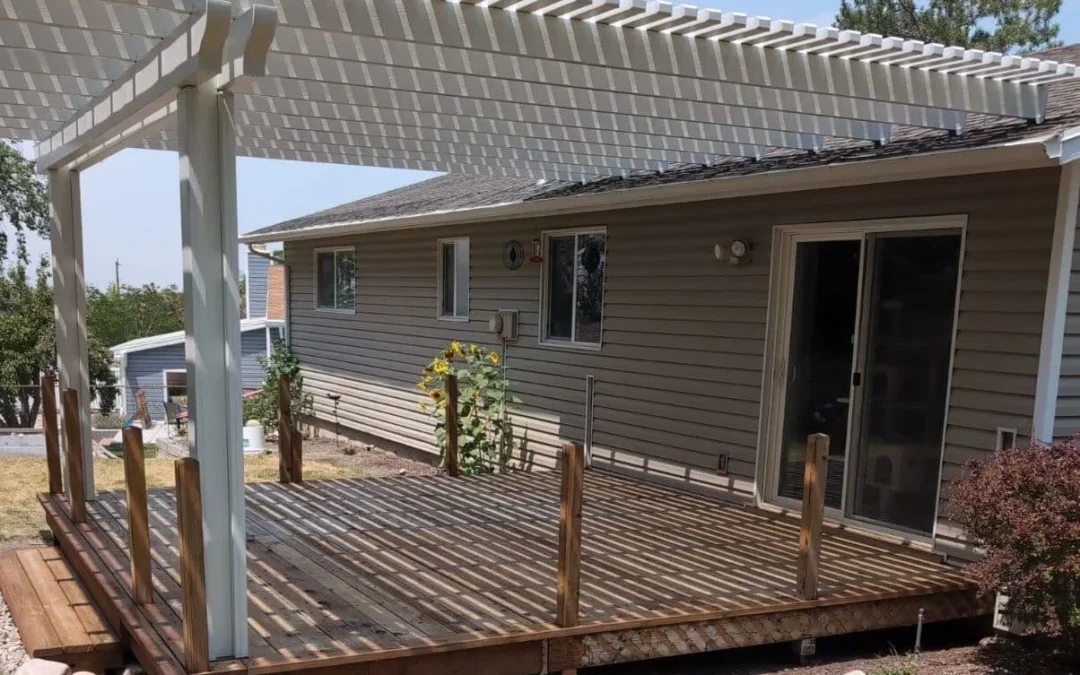
Why Decks and Pergolas Are the Ultimate Outdoor Upgrade
If you’re exploring decks and pergolas, here’s a quick overview of what they are and why they work so well together:
| Feature | Deck | Pergola |
|---|---|---|
| What it is | Elevated platform for outdoor living | Open-roofed shade structure with beams |
| Roof | None by default | Open lattice, slats, or solid cover |
| Best for | Dining, entertaining, relaxing | Shade, privacy, visual appeal |
| Combined benefit | A comfortable, shaded outdoor room | Adds structure and protection to a deck |
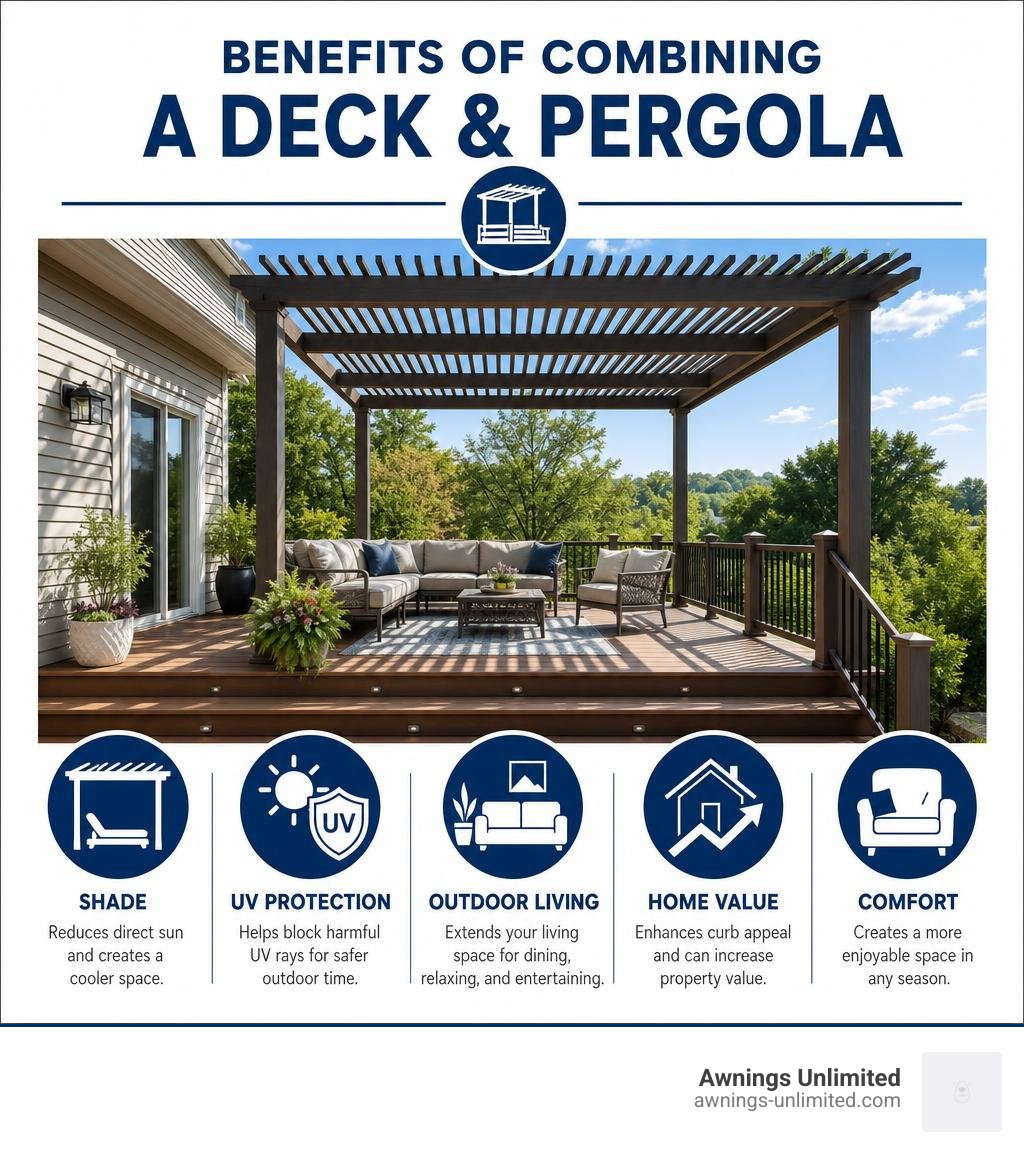
A deck gives you the space. A pergola gives you the shade and style. Together, they turn an ordinary backyard into a functional outdoor living area you’ll actually use.
Whether you’re dealing with intense summer sun, harsh UV exposure, or just an exposed deck that sits empty most of the day, a well-designed pergola or patio cover can completely change how you use your outdoor space. Shade is also a practical comfort and safety upgrade; the U.S. Environmental Protection Agency recommends seeking shade as one way to reduce UV exposure, especially during peak sunlight hours.
Houzz alone features over 7,600 photos of deck and pergola combinations, which tells you one thing clearly: homeowners love this pairing.
At Awnings Unlimited, we’ve been helping Northern Utah homeowners design and install custom shade structures, focusing strictly on permanent structural awnings, pergolas, and patio covers since 1976. As one of the most experienced providers of decks and pergolas shade solutions in the region, we specialize in these durable, fixed structures rather than temporary fabric coverings. Whether you’re starting from scratch or adding shade to an existing deck, we’ll walk you through every option.
Adding Shade to Decks, Patios, and Porches: Understanding Your Options
Before diving into design details, it helps to understand the physical differences between the main outdoor structures. While they all elevate your backyard experience, our focus is strictly on permanent, structural awnings and patio covers that provide lasting durability, rather than temporary or fabric alternatives. These structures serve different purposes:
- Decks: Elevated platforms typically built off the back of the house. They are usually made of wood or composite materials and do not have a built-in roof. They are excellent for elevating sloped or uneven yards, creating a flat surface for outdoor living.
- Patios: Ground-level outdoor spaces constructed from concrete, stone, pavers, or brick. They are highly durable, low-maintenance, and rest directly on the earth.
- Porches: Sheltered structures attached to the front or back of a house, covered by a roof supported by columns, and directly integrated with the home’s architecture.
- Pergolas: Open-roofed structures defined by columns and a framework of crossbeams or lattice. They can be attached to your home or stand completely on their own, providing filtered light and a defined architectural “room” outdoors. They are a highly popular choice for Northern Utah backyards, offering both beauty and relief from the sun.
Adding Shade to Elevated Decks vs. Ground-Level Patios
Elevated decks face unique challenges. Because they sit higher off the ground, they are fully exposed to crosswinds and intense, unfiltered sunlight. Ground-level patios, on the other hand, often benefit from natural shade cast by fences, trees, or the home itself.
When you add a shade structure to an elevated deck, weight and structural engineering become critical. You cannot simply bolt a heavy timber structure to deck floorboards without ensuring the posts run all the way to concrete footings below. Ground-level patios allow for direct anchoring into concrete pads, making structural engineering slightly more straightforward.
Open-Roofed Pergolas vs. Solid Patio Covers
Choosing between a traditional open-lattice pergola (a type of structural open awning) and a solid patio cover depends on how you plan to use your space:
- Open-Roofed Pergolas: These allow air to circulate freely while filtering sunlight. The open lattice creates a cool ventilation effect, letting hot air escape upward while blocking a significant percentage of direct heat.
- Solid Patio Covers: These provide 100% protection from both the sun and rain. If you want to use your outdoor space during a spring downpour or a winter snowstorm along the Wasatch Front, a solid cover is the way to go.
If you are on the fence about which style fits your lifestyle, exploring the Want a Pergola? 8 Reasons You Should Own One guide will help clarify how these structures improve daily comfort and home value.
Designing Decks and Pergolas for Your Backyard Oasis
Designing the perfect backyard oasis is all about balance. A gorgeous deck can feel incomplete and uninviting if it sits under the baking summer sun. Conversely, a standalone pergola in the middle of a lawn might feel isolated. By merging decks and pergolas into a cohesive plan, you create a seamless transition from your indoor living spaces to your outdoor retreat.

When you integrate a structural awning or patio cover directly onto your deck, you establish distinct zones. You can have an open-air zone for grilling and stargazing, and a shaded zone protected by a custom pergola for dining and lounging. If you prefer to keep your deck entirely open, you can also place a freestanding structure nearby. To understand your options, check out the Top Reasons to Choose a Free-Standing Pergola for Your Outdoor Space.
Choosing the Right Size and Style for Your Deck Shade Structure
To make sure your new structure looks like it belongs, consider the following design principles:
- Scale and Proportions: Your pergola should match the scale of your home and yard. A massive, heavy timber pergola will overwhelm a small single-story cottage, while a spindly, lightweight structure will look lost against a large two-story home.
- Architectural Harmony: Match the design lines of your house. Modern homes pair beautifully with clean, minimalist profiles and dark powder-coated metals. Traditional homes often look best with classic white profiles or wood-grain finishes featuring detailed end-cut rafters.
- Local Design Inspiration: Homeowners throughout our Northern Utah service areas—from Alpine and Bountiful to Bluffdale and Eagle Mountain—have customized their designs to fit local landscapes. Blending your shade structure with the natural mountain backdrops of the Wasatch Front creates a stunning visual harmony that enhances your home’s curb appeal.
For more creative ideas to spark your imagination, read through our guide on how to Design Your Own Oasis: Custom Pergola Ideas for Every Style.
Modern Trends in Decks and Pergolas Design
Today’s outdoor living designs are smarter and more comfortable than ever. Some of the most popular modern upgrades include:
- Integrated Lighting: Low-voltage LED cap lights on posts, recessed lighting in the rafters, and dimmable string lights let you transition from daytime shade to evening ambiance seamlessly.
- Privacy Screens and Side Walls: Adding a slatted privacy wall to one side of your pergola blocks the view from nearby neighbors and helps cut down on late-afternoon crosswinds.
- Motorized Shade Elements: Adjustable louvers allow you to open the roof for full sunshine or close them completely with the press of a button when a sudden rain shower rolls in.
To see what is currently capturing the attention of homeowners across the Wasatch Front, dive into the latest Pergola Installation Trends in Utah.
Materials, Costs, and Maintenance for Outdoor Structures
Choosing the right material for your deck and pergola combination is the most important decision you will make. It dictates how much time you will spend maintaining the structure, how long it will last in our harsh Utah climate, and how much it will cost over its lifespan.
While traditional wood has a rustic charm, it is highly susceptible to warping, splitting, and rotting under Utah’s intense sun and heavy winter snow. Vinyl is another option, but it can crack in freezing temperatures and yellow over time under harsh UV exposure.
For those who enjoy a hands-on project, there are pre-packaged wood kits available on the market. However, DIY wood kits still require regular, intensive upkeep to survive the elements and prevent rapid deterioration.
To avoid the endless cycle of sanding, staining, and painting wood, we highly recommend Alumawood. Alumawood is heavy-duty aluminum engineered with a textured, baked-on finish that perfectly mimics the look of natural wood. It is completely termite-proof, will not rot, warp, peel, or crack, and requires virtually zero maintenance.
| Material | Initial Cost | Maintenance Required | Lifespan in Utah | Resistance to Weather |
|---|---|---|---|---|
| Natural Wood | Moderate to High | High (Staining/painting every 1-3 years) | 10-15 years | Prone to warping, rot, and splitting |
| Vinyl | Moderate | Low (Occasional washing) | 15-20 years | Can crack in deep freeze; may yellow |
| Alumawood (Aluminum) | Moderate to High | None (Occasional rinse with hose) | 30+ years | Outstanding; rust-proof, fade-resistant |
To get a detailed breakdown of how these material costs compare over time, take a look at our article From Alumawood to Wood: Unpacking Pergola Costs and Material Choices.
Frequently Asked Questions about Shade Structures
How much maintenance does an Alumawood pergola require?
Virtually none! Unlike wood, which requires regular sanding, staining, and sealing to prevent rot, Alumawood only needs an occasional spray with a garden hose to wash away dust. It will not chip, peel, rust, or warp. For an in-depth look at how Alumawood stands up to the elements, explore our Ultimate Custom Alumawood Pergola Guide.
Do I need a building permit for a deck and pergola project?
In most Utah municipalities, any structure attached to your home or exceeding a certain square footage (typically 120 to 200 square feet for freestanding structures) requires a building permit. Local zoning laws also dictate setback requirements from property lines.
Because building codes vary between Salt Lake City, Sandy, Layton, and other local areas, it is always best to work with a licensed professional who handles the permitting process for you. For more information on navigating local regulations, see our Pergola Builders Utah: Complete Guide.
Can you install a pergola on an existing deck?
Yes, but it requires careful planning. A pergola cannot simply be screwed into the deck’s surface boards; the deck’s framing must be able to support the weight and handle wind loads.
During installation, we ensure that the pergola’s structural posts align with the deck’s underlying joists and run down to solid concrete footings, or are securely retrofitted with heavy-duty steel brackets designed to distribute the structural load safely.
Conclusion
Investing in decks and pergolas is one of the best ways to expand your living space, protect your family from harsh summer sun, and add lasting value to your home. By choosing durable, low-maintenance materials like Alumawood, you ensure that your backyard retreat remains a place of relaxation rather than a source of weekend chores.

At Awnings Unlimited, we have spent over five decades helping families across Salt Lake City, the Wasatch Front, and Northern Utah design and install custom shade solutions, specializing exclusively in heavy-duty structural awnings and patio covers. Our expert team handles everything from custom design to professional installation and local permitting.
Ready to transform your backyard? Schedule a Consultation for Salt Lake City Pergolas with us today, and let’s design your dream outdoor space!